
AI Literacy teaches how to understand and use AI responsibly. It is essential, and rightly begins from age 8-10. But childhood starts earlier — and AI has already arrived there. Through voice assistants, autoplay, and instant answers, children aged 2 to 7 are being shaped by AI daily, not as a lesson they see, but as an invisible environment that changes how they handle boredom, struggle, and attention.
To address this gap, we have coined the term AI Pre-Literacy. AI Pre-Literacy is not teaching AI to toddlers. It is protecting what must come first — the capacity to tolerate boredom, to persist, to imagine, and to connect with people. The difference is simple: AI Pre-Literacy is development before AI. AI Literacy is learning with AI. Without the first, the second cannot succeed.
BridgeLineGP is different because we focus on these foundational years. We are for everyone who shapes early childhood — parents, teachers, clinicians, researchers, and policymakers and international bodies — offering research-based strategies to keep AI as a tool, and childhood as human.

AI Pre-Literacy Research Observatory: An Open Evidence Map for Researchers

AI Literacy Is Essential — And It Assumes Your Child Is Already 8. What About Age 2–7?

Why AI Literacy Gives Your Child an Edge — From Prompting to Creating to Questioning
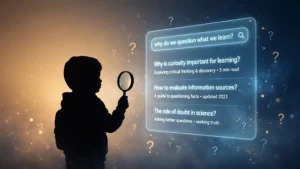
Digital Literacy and the Search Engine Child: Why Finding Isn’t Understanding
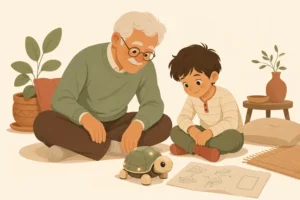
The Logo Turtle and the Birth of Thinking: How Computer Literacy Tried to Teach Children to Think

What Was Computer Literacy? Why Knowing Parts of a Computer Was Once Enough
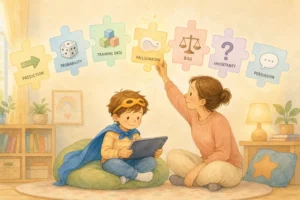
The Competence–Understanding Gap: Your Child Knows How to Use AI— But Does Your Child Understand It?

The Machine Tongue Part 3: Bringing The Mother Tongue Home [Final Part of 3]

The Machine Tongue Part 2: What Children Learn and What They Lose [Part 2 of 3]